Your program · Dimensional analysis · Nearest tenth · No calculator · Pass at 90%
Dosage calculations practice, set to your program's rules
For nursing students. Your passing score, your notation and your rounding rule, on every problem.
Coming to the App StoreiPhone
An iPhone app, in English. A subscription: $39.99 a year or $9.99 a month on the US App Store.
Specimen
Injectable · Dimensional analysis · Nearest tenth
Order: 1 mg. On hand: 0.6 mg per 1 mL. How many milliliters do you draw up?
Worked solution: 1 mg times 1 mL over 0.6 mg equals 1.666 repeating mL, which rounds to 1.7 mL at the nearest tenth.
| Answer | Verdict |
|---|---|
| 1.7 mL | Matches |
| 1.67 mL | Does not matchRounded to the wrong precision. The chain was worked correctly; this program rounds to the nearest tenth. |
What DoseReady is
- For
- US pre-licensure nursing students preparing for their program's dosage calculation exam.
- Practice
- Practice under your program's passing score, notation, rounding rule and exam conditions, in nine problem families.
- Shows
- A worked solution for every problem, the mistake a wrong answer fits when it fits one, and the drug labeling or reference each problem is built from.
- Is not
- A dose calculator, or a medication or pharmacy product. It is exam practice and is never for patient care.
DoseReady is an iPhone app for US pre-licensure nursing students that provides dosage-calculation (med math) practice under the rules of the student's own nursing program: its passing score, its notation (dimensional analysis, ratio and proportion, or the formula method), its rounding rule and its exam conditions. It covers nine problem families, names a wrong answer's error type when the answer fits a known mistake, and lists the published US drug labeling or clinical references each problem is built from. It is exam practice and is never for patient care.
How practice works
Step 1
Enter your program's rules
Copy them from your syllabus once: the passing score, the method your program grades (dimensional analysis, ratio and proportion, formula method), the rounding rule, whether a calculator is allowed and how many sittings you get. The exam's length and time limit are asked for the first time you run a mock exam. The exam rules by program table sets out the passing score and retake rules of 23 published policies.
A rounding rule can be the nearest whole number, nearest half, nearest quarter, nearest tenth, nearest hundredth or nearest thousandth, with your program's rule for an answer that sits exactly halfway, or a rule that always rounds up or always down. No rule has a default, and the app never guesses one.
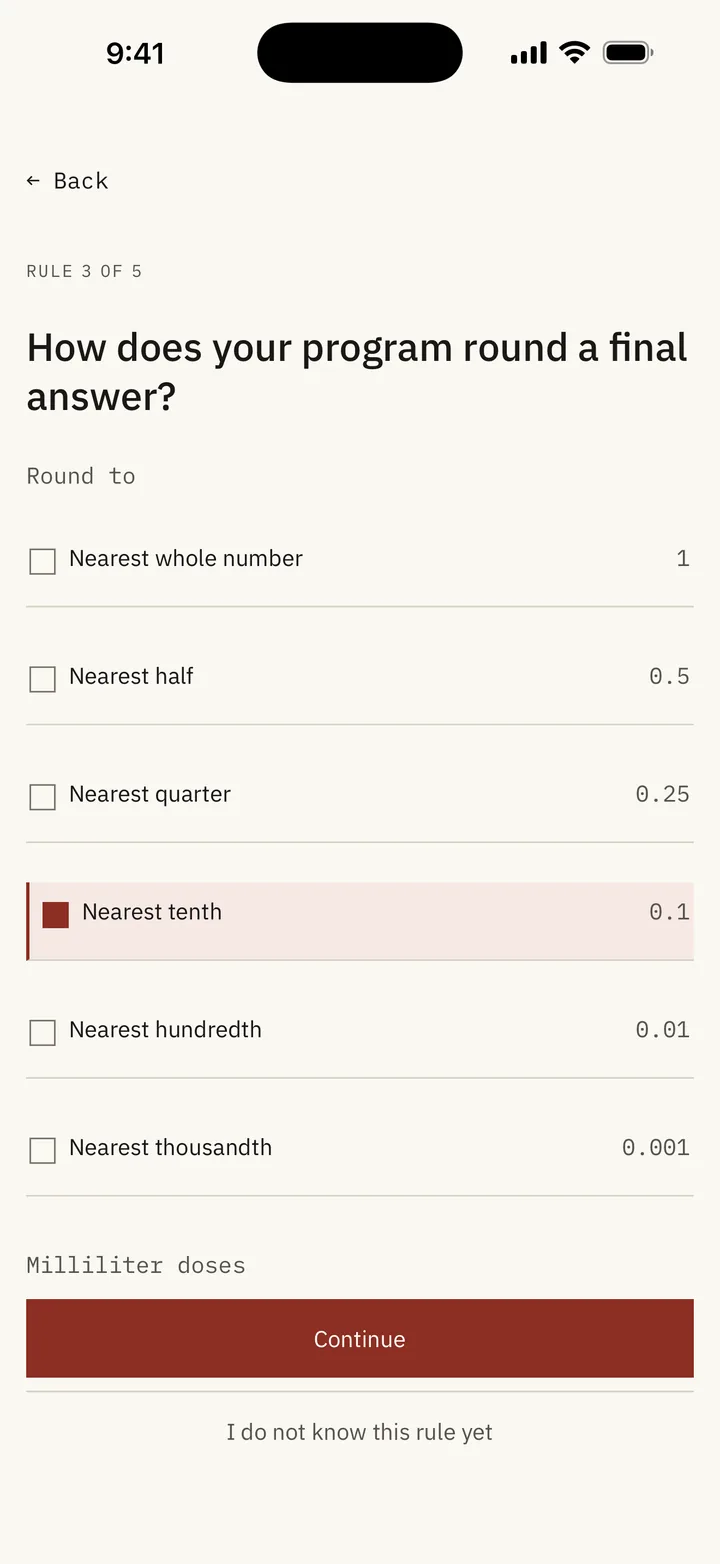
Fig. 1Setup asks for each rule in turn. This is the rounding rule, the third of five. Step 2
Work problems under them
Every problem is presented and graded under your rules, which stay in view at the top of the screen. Each one is a written scenario whose numbers are drawn from a checked range, so a problem you meet again often comes back with different numbers.
Work one family on its own or all nine mixed. The mock exam rehearses under your program's own length and time limit.
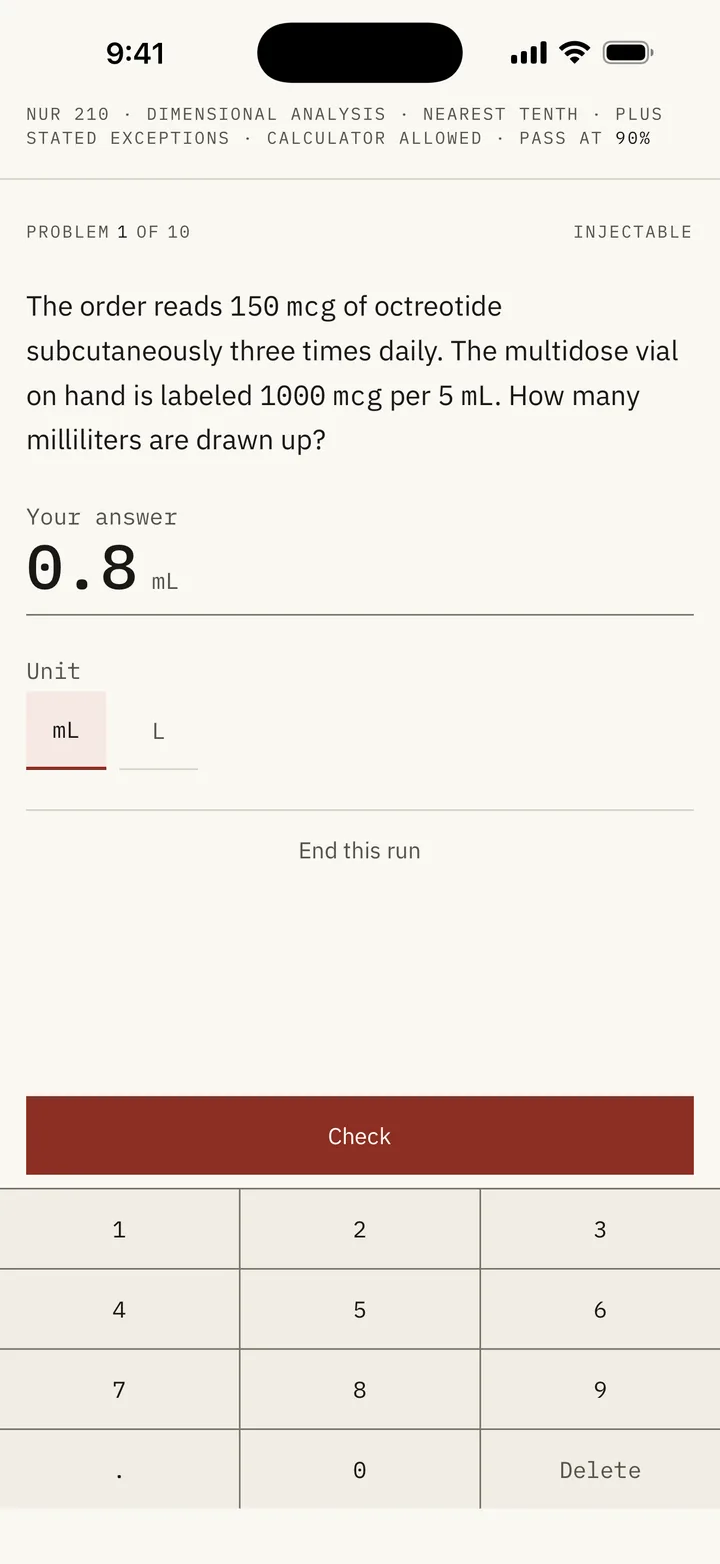
Fig. 2A problem. The rules it is graded under stay in the line at the top. Step 3
Read why an answer did not match
An answer matches or does not match. When a wrong answer fits a known mistake, the app names it. When it fits none, the app says so instead of guessing.
The worked solution is set out in your program's notation, with units canceling across the chain, and lists the documents the problem was built from.
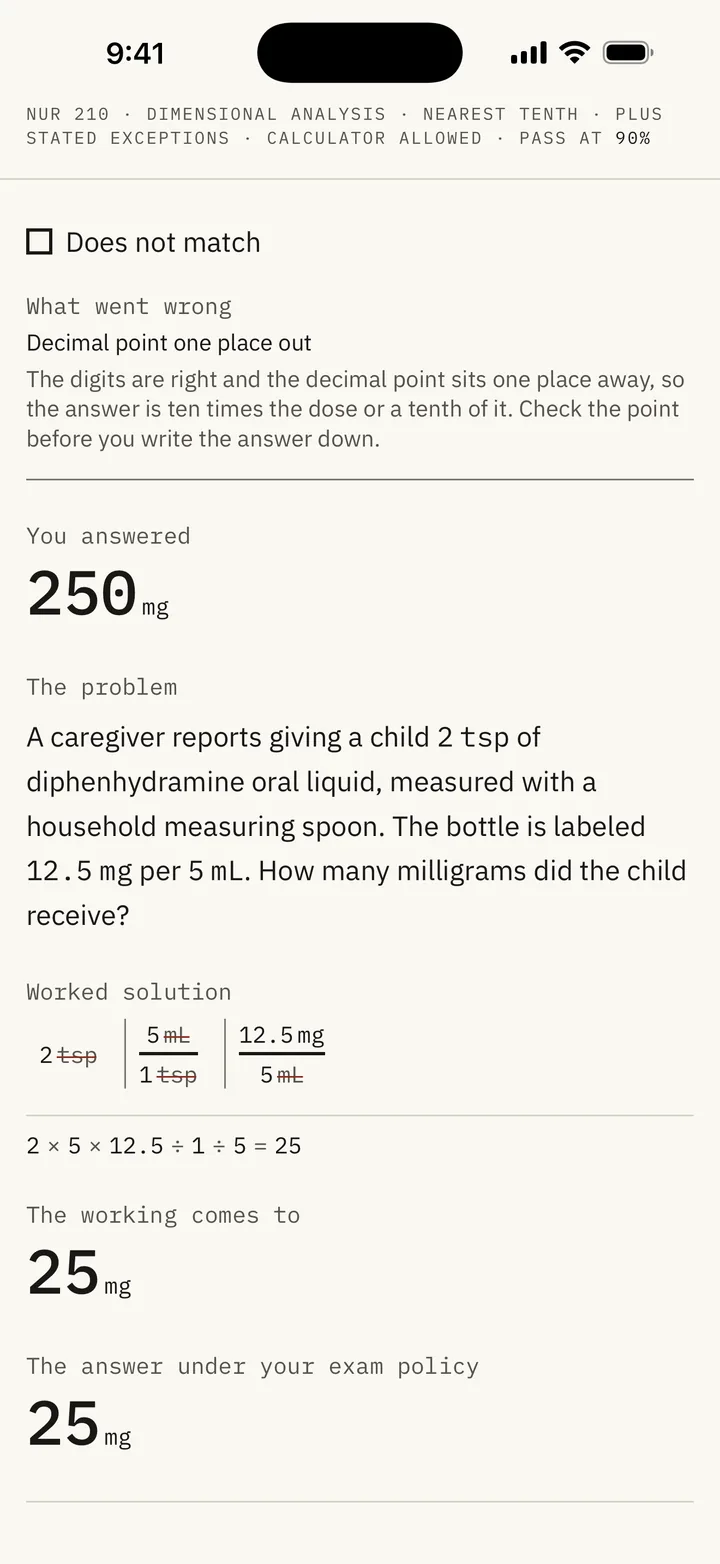
Fig. 3An answer one decimal place out: the mistake is named, then the worked solution. Step 4
Check readiness, stated as an estimate
Readiness compares how you are working now with your program's passing score, over a stated window of recent practice, and states how far from it you are.
It stays withheld until you have answered enough problems to support it. It is an estimate, never a statement about your exam.
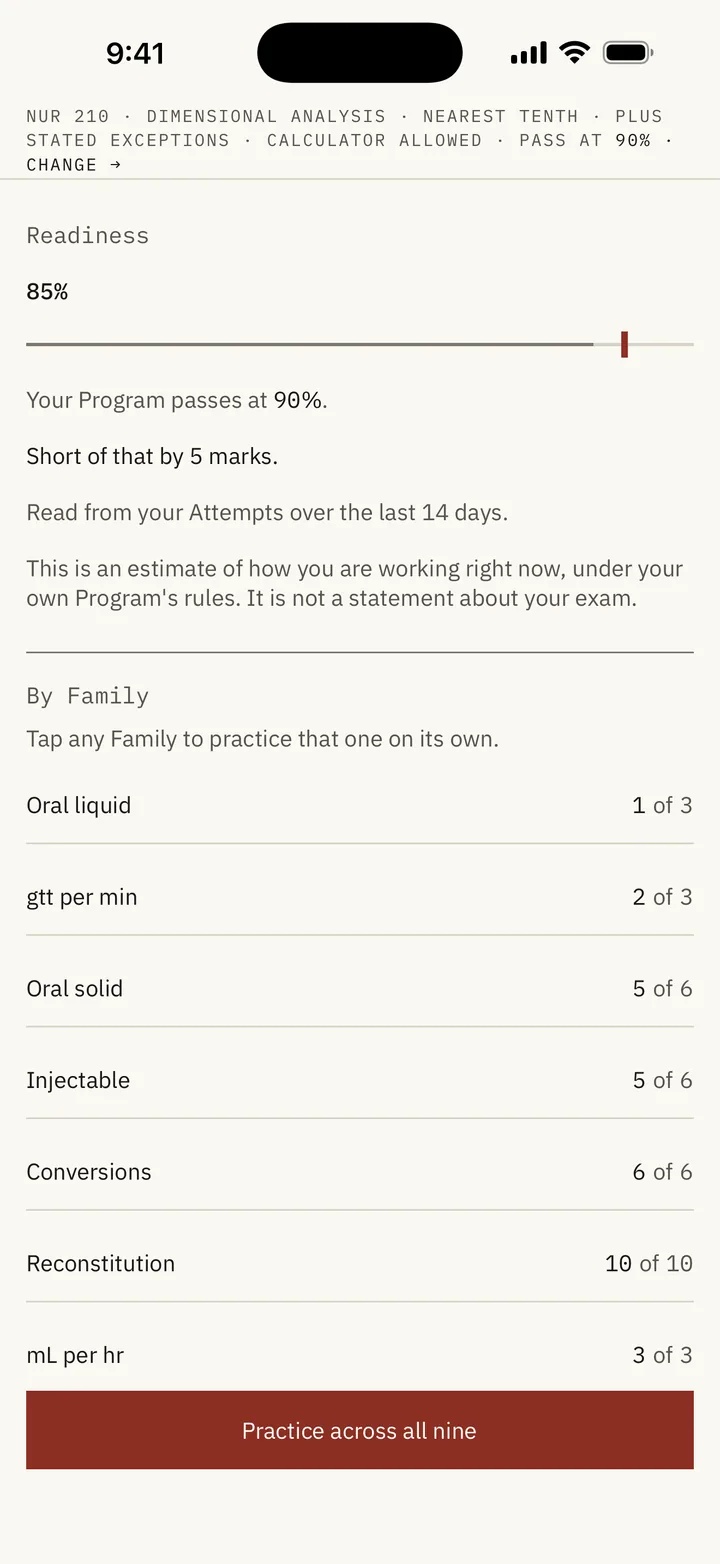
Fig. 4Readiness against the passing score, with the gap to it stated, then each family.
Figures 1 to 4 are screens from the iPhone app, set up for an example program, NUR 210.
Nine problem families
Guides
- Math in nursing school: what you calculate and how programs test it
- Dosage calculation cheat sheet: nursing math on one printable page
- Tablet dosage calculation: how many tablets or capsules per dose
- Dosage calculation formulas for nursing: one table for the common problems
- Nursing dosage conversion chart: metric and household equivalents
- How to calculate mL/hr: the IV pump rate formula for each kind of order
- How to calculate infusion time in hours and minutes
- Reconstitution dosage calculation: from a powder vial to milliliters
- Weight-based dosage calculation: mg/kg per dose, per day or as a volume
- The dosage calculation exam in nursing school: what is on it and how to prepare
- Rounding rules for dosage calculations
- IV drip rate formula: how to calculate gtt/min (drops per minute)
- Injectable dosage calculation: how many mL to draw up from a vial
- Oral liquid dosage calculation: how many mL carry the ordered dose
- Desired over have formula: how D/H × Q works in dosage calculations
- Dosage calculation mistakes: how to tell which slip gave a wrong answer
- Dosage calculation exam rules by nursing program: passing scores, retakes and calculators
- Leading and trailing zeros in medication doses: the ISMP rules for nursing
- Ratio and proportion dosage calculations: how to set them up
- Dimensional analysis for nursing dosage calculations
Why an answer did not match
Six mistakes the app can name, and what it says when an answer fits none of them.
- Decimal point one place out
- The digits are right and the decimal point sits one place away, so the answer is ten times the dose or a tenth of it.
- Wrong unit
- The number is right and the unit is not the one the order asks for.
- Pounds used as kilograms
- The order is written per kilogram and the weight was used in pounds.
- Conversion factor inverted
- One conversion factor was applied upside down.
- Conversion skipped
- A step of the chain is missing, so one unit was never converted.
- Rounded to the wrong precision
- The chain was worked correctly and the answer was rounded to a different precision than your program's rule states.
- Not classified
- The answer matches no mistake the app knows how to name, so it names none. It is still marked as not matching, and the worked solution shows the route your program expects.
Where the problems come from
Every problem is built from published US drug labeling, such as package inserts and OTC Drug Facts panels, or from named clinical references. Most cite a label on DailyMed, the National Library of Medicine's database of FDA drug labels. Each problem lists those documents under its worked solution, so you can read them yourself.
Before a content release, an automatic check runs every problem across its range of numbers, at both ends and at points between, and confirms that its units cancel, that each notation it offers can be written out, and that no known slip lands on the right answer. No model runs in the app while you practice. No licensed clinician has reviewed the problem set: where a problem and its source disagree, trust the source and what your program teaches.
Who makes DoseReady and how the problems are checkedWhat it does not cover
Not covered: titration, including heparin rate changes by aPTT; insulin; and checking an order against a pediatric safe-dose range. Single heparin doses and rates, and pediatric weight-based doses, are covered.
Check your syllabus against the nine families above.
Price
| Yearly | $39.99 | a year |
|---|---|---|
| Monthly | $9.99 | a month |
One auto-renewing subscription opens every problem in all nine families and the mock exam. On the US App Store it is $39.99 a year or $9.99 a month; the price in your country is shown in the app before you subscribe.
Payment is charged to your Apple Account when you confirm the purchase. The subscription renews automatically unless you cancel it at least 24 hours before the end of the current period, and you can manage or cancel it in your Apple Account settings. If it ends, everything you have already practiced stays readable on your iPhone.
Coming to the App StoreiPhone
Practice, never patient care
DoseReady is exam practice. It does not work out doses for patients and is never for patient care: in a clinical setting, follow your instructor, your program, the prescriber and the pharmacist.
Every clinical stem is authored practice content. The app never asks for a patient's details.
No account
There is no sign-up and no account. Your program's rules and your practice history stay on your iPhone. There is no advertising and no usage analytics in the app.
Two services receive identifiers for this install: one to verify your subscription, one to deliver corrected content. The privacy policy lists exactly what each one receives.
Questions
- Is DoseReady a dosage calculator?
- No. DoseReady presents practice problems and marks your own arithmetic under your program's rules. It never works out a dose for a patient, and it must never be used for patient care.
- Which calculation methods does it use?
- Every problem is worked in dimensional analysis and in ratio and proportion, and each proportion is set the textbook way, with like units in the same places, as in 1,000 mL : 10 hr :: x mL : 1 hr. The formula method (D/H × Q) is offered on 95 of the 180 problems, the ones it fits: doses, with the dose desired and the dose on hand in the same drug unit, and infusion times, as the volume to infuse over the volume the pump gives in one hour, times that hour. It is not offered for a rate worked out from a volume over a time, such as 1,000 mL over 10 hr: a volume divided by a time is not a dose desired over a dose on hand. When a method does not fit a problem, the app shows that problem in dimensional analysis and says so.
- Does DoseReady tell me how I will do on my exam?
- No. Readiness compares how you are working now with your program's passing score, over a stated window of recent practice. It is an estimate, it is withheld until you have answered enough problems to support it, and it is not a statement about your exam.
- Do I need an account?
- No. There is no sign-up, no sign-in and no email address. Your practice history stays on your iPhone; the only copy off the phone is in your own iCloud or computer backup, if you make one. Your subscription belongs to your Apple Account and can be restored on a new iPhone.
- How much does it cost?
- DoseReady is an auto-renewing subscription: $39.99 a year or $9.99 a month on the US App Store, and answering problems and the mock exam require it. It renews unless you cancel it at least 24 hours before the end of the current period.
- Is DoseReady affiliated with my nursing program?
- No. DoseReady is not affiliated with, or endorsed by, any nursing program, school, licensing board or exam provider. You enter your program's rules from your own syllabus, and the app never fills one in for you.
- Who checks the problems?
- Every problem is built from published US drug labeling or named clinical references, which it lists under its worked solution. Before a content release, an automatic check runs every problem across its range of numbers, at both ends and at points between, and confirms that its units cancel, that each notation it offers can be written out, and that no known slip lands on the right answer. No licensed clinician has reviewed the problem set, so where a problem and its source disagree, trust the source and what your program teaches.
- Which devices does it run on?
- iPhone. The app is in English.
Anything else: Support.